The 2026 Dallas Corporate Event Photography Pricing Guide: Why 'Cheap' is Your Most Expensive Mistake
The State of Corporate Event Photography in Dallas: 2026 Market Overview
Dallas doesn't do anything small. Home to 22 Fortune 500 headquarters and one of the busiest convention corridors in the country, the DFW metroplex operates at a scale that makes most other markets look like warm-up acts. That scale has a direct effect on what a corporate event photographer Dallas professionals hire actually costs — and why comparing those rates to cities like Austin or San Antonio is rarely an apples-to-apples exercise.
Market insight: Dallas photography rates run approximately 10–15% above the national average, driven by concentrated corporate demand and a year-round convention calendar.
The Kay Bailey Hutchison Convention Center alone hosts hundreds of events annually, creating predictable seasonal pricing peaks when top-tier photographers get booked months in advance. During peak conference season, the cost of corporate event photography in Dallas companies pay isn't just a vendor fee — it reflects real market scarcity.
There's also a broader shift happening across the industry. Savvy marketing directors no longer think about event photos as documentation. They think about brand assets — images that fuel LinkedIn campaigns, investor decks, and post-event press releases. That distinction changes everything about what you should be budgeting with a Dallas corporate event photographer.
Understanding why DFW pricing works the way it does is the first step. Next, let's break down exactly what each price tier actually gets you.
Breaking Down the Tiers: Understanding Event Photography Pricing in Dallas
Understanding event photography pricing in Dallas starts with recognizing that not all photographers are priced equally — and that gap in cost reflects a genuine gap in deliverables. As a marketing director, the right question isn't "What's the cheapest option?" It's "Which tier actually matches this event's business stakes?"
Here's how the DFW market breaks down:
Entry-Level ($150–$250/hr)
This tier works best for low-stakes internal events — think employee mixers, small team meetings, or informal office gatherings where images stay out of public-facing marketing channels.
Pros:
Lower upfront cost
Accessible for tight departmental budgets
Cons:
Inconsistent lighting and composition skills
Slower turnaround, often no guaranteed delivery timeline
Typically no commercial usage license included
Mid-Range Professional ($300–$450/hr)
According to industry reports, mid-range professionals typically charge between $300 and $450 per hour — and this tier represents the sweet spot for most corporate marketing needs. You're getting reliable technical skill, professional equipment, and consistent brand-quality results.
Pros:
Strong portfolio of corporate work
Faster turnaround suitable for post-event marketing
Basic color correction often included
Cons:
May not have specialized experience with large-scale productions
Backup equipment not always guaranteed
Premium / Agency ($500–$800+/hr)
For high-profile galas, celebrity speaker engagements, or major brand launches, premium photographers are non-negotiable. Full-day coverage at this level can exceed $6,500, per agency rate card data — but the output justifies the investment when your brand's reputation is on the line.
Pros:
Full creative direction and second shooters available
In-house retouching and fast delivery windows (like the 24-hour turnaround José Soriano Photography provides) that directly support post-event marketing ROI
Commercial licensing typically bundled
Cons:
Higher cost requires advance budget approval
Why the 2-Hour Minimum Matters
In practice, most DFW professionals won't book less than two hours. Setup, breakdown, and travel absorb roughly 30–45 minutes on either end — making shorter bookings financially impractical for experienced photographers.
What this means for you: build a buffer into your event timeline. Accurate scheduling up front protects your coverage and your budget. Speaking of budgets, the structure of how you pay — hourly versus day rate — deserves just as much attention as the tier you choose.
Hourly vs. Day Rates: Strategic Budgeting for Dallas Corporate Events
Choosing the right pricing structure is one of the most practical decisions you'll make when hiring a photographer — and it's one that directly affects your bottom line. Understanding Dallas corporate event photographer hourly rates versus day rates isn't complicated once you know what each model is actually designed for.
Hourly rates make the most sense for shorter, self-contained events. Think ribbon cuttings, three-hour networking mixers, or awards luncheons. If your event wraps up in four hours or less, paying hourly keeps costs proportional to the coverage you actually need. Typical hourly engagements in Dallas run two to four hours, with a minimum booking requirement that varies by photographer tier.
Day rates, on the other hand, are built for multi-day conventions — the kind hosted at venues like the Hilton Anatole or the Omni Dallas. In practice, day rates often include a slight volume discount compared to stacking cumulative hourly fees, making them the smarter financial choice when coverage spans a full day or multiple days.
The right pricing structure isn't about spending less — it's about spending accurately for what your event actually requires.
What's typically included in either structure:
Commercial usage license (the legal right to use images in marketing materials)
Basic color correction (adjusting exposure and white balance across delivered images)
A curated final gallery
One red flag worth flagging early: per-image pricing is generally a poor fit for event coverage. It creates incentives that work against you — fewer delivered images to minimize the photographer's workload, or inflated costs when coverage runs long.
The base package structure matters, but it's often what sits on top of that structure where real value — or real cost — starts to accumulate. The next section breaks down exactly which add-ons deliver the strongest return for Dallas events.
The 'Dallas Extras': High-Margin Add-ons That Drive Value
Beyond the base package, corporate conference photography packages in Dallas planners build often include specialized add-ons that dramatically expand what you walk away with. These aren't upsells for the sake of upsells — each one solves a specific operational or marketing challenge. Understanding them upfront helps you budget accurately and avoid sticker shock on final invoices.
On-Site Headshot Stations
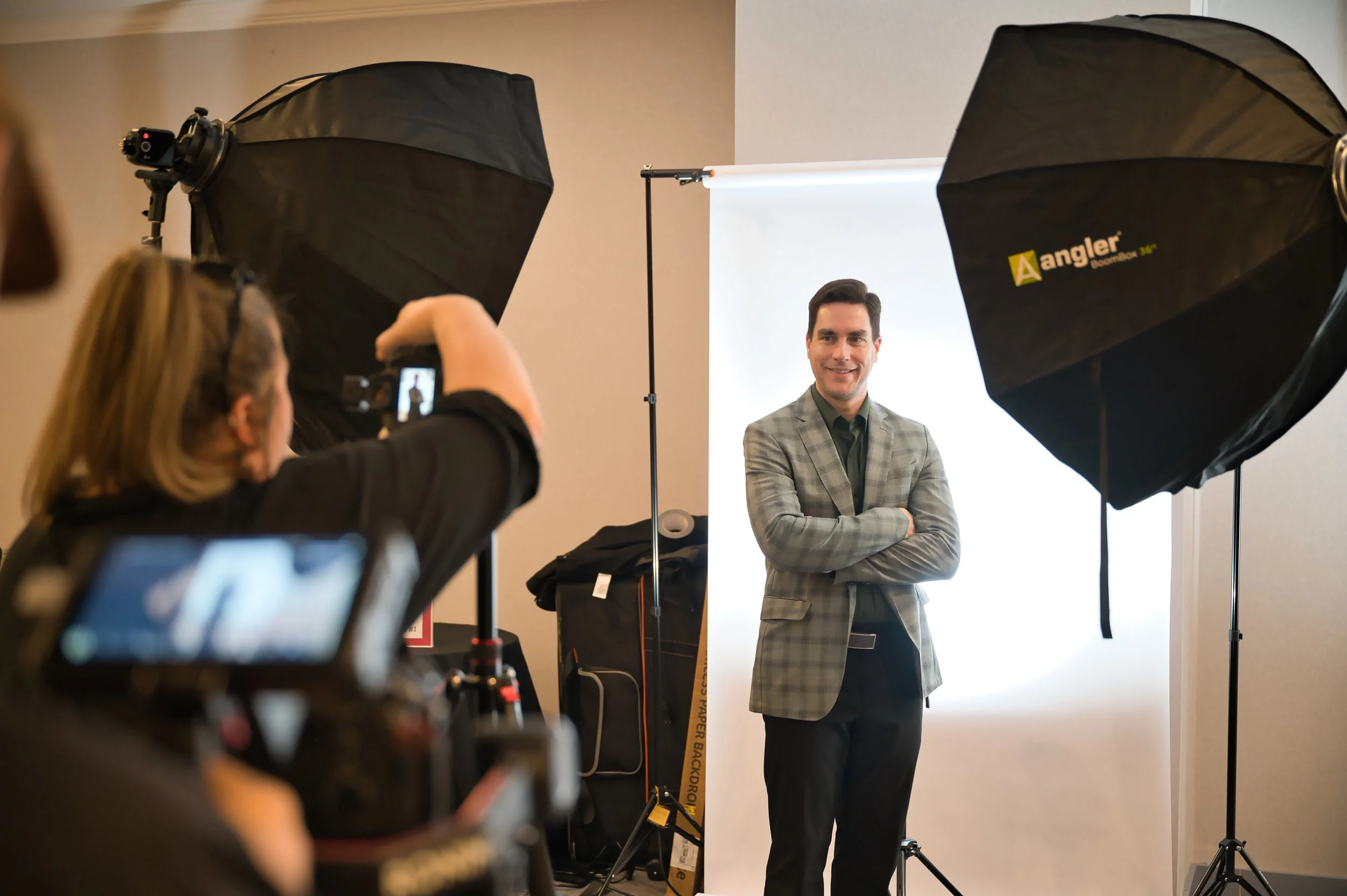
A headshot station transforms your trade show or conference into a branded touchpoint attendees genuinely appreciate. In Dallas, on-site headshot stations typically run between $1,500 and $3,500 per day, depending on setup complexity and editing volume. For corporate events where networking is a core goal, this add-on doubles as a lead magnet — attendees linger, engage, and associate your brand with providing tangible professional value.
Best for: Trade shows, annual conferences, membership association events.
Rush Delivery for Social Media Teams
Speed is currency in post-event marketing. When your social team needs assets live within hours, rush delivery is the lever that makes it happen. Standard practice in the Dallas market puts this surcharge at roughly 25% of the total fee, or a flat $300–$500. Providers like José Soriano Photography include in-house retouching and 24-hour delivery as standard — meaning that fast turnaround for post-event marketing ROI is already baked in, not added on.
Best for: Brand launches, product reveals, high-profile executive events.
Second Shooters
For events exceeding 300 attendees, one photographer simply can't be everywhere. A second shooter — typically priced at $75–$150 per hour — covers simultaneous breakout sessions, candid crowd moments, and speaker close-ups without gaps in coverage.
Best for: Multi-room conferences, galas, large-scale corporate summits.
Social Media 'Live' Delivery
Real-time highlights — lightly edited images delivered mid-event for immediate posting — run $250–$500. The value is immediate: your audience sees authentic, branded moments while the event's still happening.
Best for: Product launches, brand activations, executive keynotes.
Once you've mapped these add-ons against your event goals, the next logical question becomes whether the total investment actually pays for itself — and that's where the real math gets interesting.
The ROI Calculation: Turning a Line Item into a Marketing Engine
Budget conversations around photography often stall at the invoice. But savvy marketing directors know the real question isn't "What does this cost?" — it's "What does this earn?"
"Once I started thinking about photos as content assets instead of event souvenirs, the budget conversation with leadership became completely different." — a Marketing Director, B2B SaaS Company
The 12-Month Content Calendar
A single conference generates far more visual content than most teams realize. Keynote moments, networking candids, branded stage shots, headshots — these feed social media posts, press releases, LinkedIn campaigns, and even recruitment pages for a full year. According to SEO & Content Strategy Insights, professional photos provide 12 months of social media content, significantly reducing the long-term cost per asset. That's sustained marketing output from one afternoon's investment.
Breaking Down the Cost-Per-Asset
"When I divided our photography spend by the number of images we actually used in campaigns that year, the per-image cost was lower than most stock photo subscriptions." — a Marketing Director, Healthcare Technology Firm
A $2,500 session with a skilled DFW event photographers typically yields 100+ polished, on-brand images. That's roughly $25 per asset — often less than a single licensed stock photo, and infinitely more authentic. Working with providers who include in-house retouching and 24-hour delivery (as Jose Soriano Photography does) also means your team can activate those assets immediately for post-event marketing, maximizing ROI while the event is still top-of-mind.
ROI Formula:(Number of usable images × average stock photo replacement cost) − Photography investment = Net content savings
Example scenario: 100 images × $50 stock average − $2,500 investment = $2,500 in net savings, before factoring in brand authenticity or earned media value.
The Hidden Cost of "Cheap" Photography
Low-quality images carry real brand risk. Blurry shots, poor lighting, and unflattering angles can't be used in high-end print materials, investor decks, or PR pitches — meaning you'll either pay for reshoots or default to generic stock photography anyway. That's paying twice.
"We tried cutting corners one year. We ended up buying stock photos to replace the unusable event images. Never again." — a Marketing Director, Commercial Real Estate Group
Custom event libraries also reduce your organization's long-term dependency on expensive stock subscriptions — a compounding benefit that grows with every event you document well. When you're ready to put all of this together into a concrete budget, the final section will walk you through exactly what to expect.
Key Takeaways
- Invest Wisely: Hiring a corporate event photographer in Dallas is a strategic decision that impacts your brand's image. Opting for "cheap" options can result in subpar deliverables that don't support your marketing goals.
- Understand Pricing Tiers: Familiarize yourself with the different pricing tiers—Entry-Level, Mid-Range Professional, and Premium/Agency—to align your budget with your event's needs and stakes.
- Choose the Right Rate Structure: Decide between hourly and day rates based on your event's duration and complexity. This ensures you pay accurately for the coverage you need.
- Consider Add-Ons Carefully: Evaluate high-margin add-ons like second shooters and expedited delivery to enhance the value of your corporate conference photography packages in Dallas.
By understanding the nuances of event photography pricing in Dallas, you can make informed decisions that turn your photography investment into a powerful content engine for your brand.
Conclusion: Budgeting for Your Next Dallas Event
Smart budgeting starts with realistic benchmarks. For a standard 6-hour corporate seminar in Downtown Dallas, plan to invest $1,800 to $2,500 for a seasoned professional — a figure that holds whether you're comparing full-day packages or researching convention photographer daily rates in Dallas across the DFW market.
Before you sign any contract, run through this quick checklist:
Portfolio review — Does their work match your event's style and scale?
Insurance verification — Confirm they carry liability coverage for your venue's requirements
Turnaround time agreement — Prioritize photographers who offer in-house retouching and 24-hour delivery, so your post-event marketing moves immediately
The right photographer isn't a line item. They're a content asset that keeps working long after the event ends. José Soriano Photography delivers every package with in-house retouching and 24-hour delivery built in — because fast turnaround directly drives post-event marketing ROI.
Ready to get a custom quote for your next DFW event? Contact Jose Soriano Photography today and put professional imagery to work for your brand.